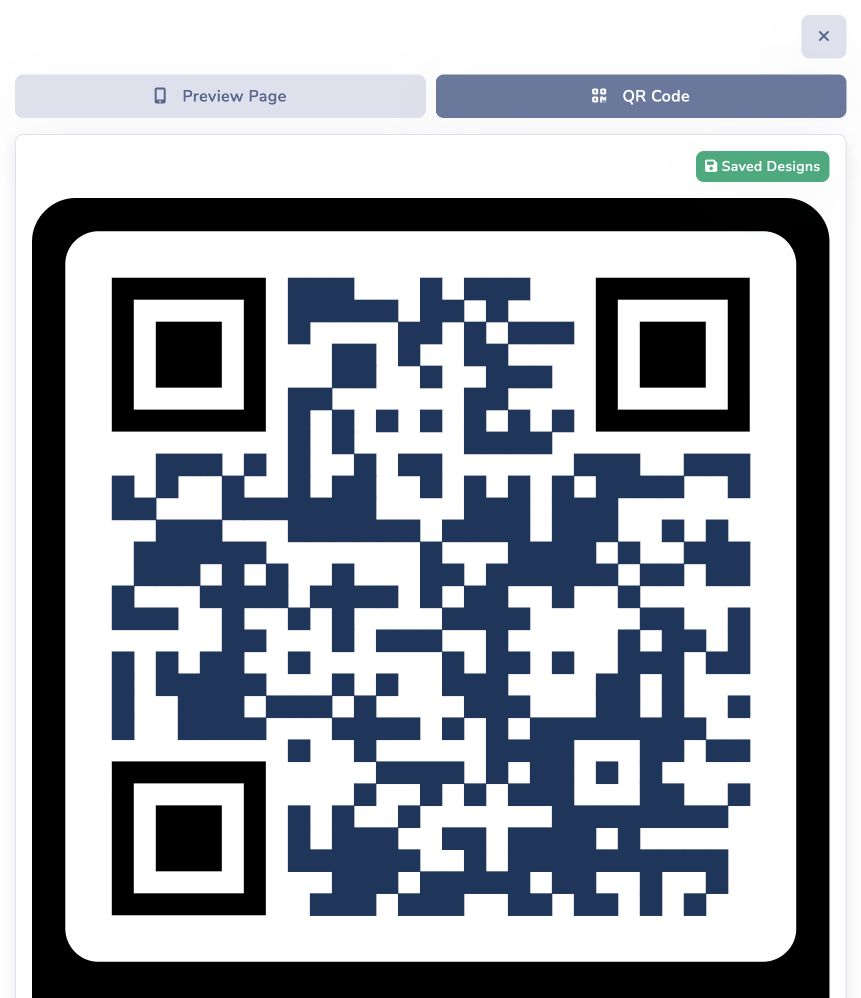

Our account test
On September 23, 2026, we used a dedicated trial account and fictional contact details. We created a website QR, an independent styled copy and a Profile Card. The original short URL reached our homepage, then our methodology page after editing the destination. Three iPhone scans also reached the updated page.
This is a partial account test. We did not test API calls, bulk imports, collaboration, capacity limits, static creation or payment. Our existing numeric scores remain unchanged; the four criteria supported by these observations remain provisional because material checks are outstanding.
Design and everyday management
Duplication produced a separate short URL. Renaming worked. Moving the copy into a folder left the save indicator running; the folder initially appeared empty after reloading, then its label appeared after a later design save. We record the delay without treating it as a confirmed failure.
We applied a frame and navy modules to the copy. Its preview decoded to the copy’s own short URL. In response to our request to download and open JPG, PNG, SVG, EPS and PDF, the account holder confirmed that they worked. We did not independently inspect the files, vector structure or print quality.
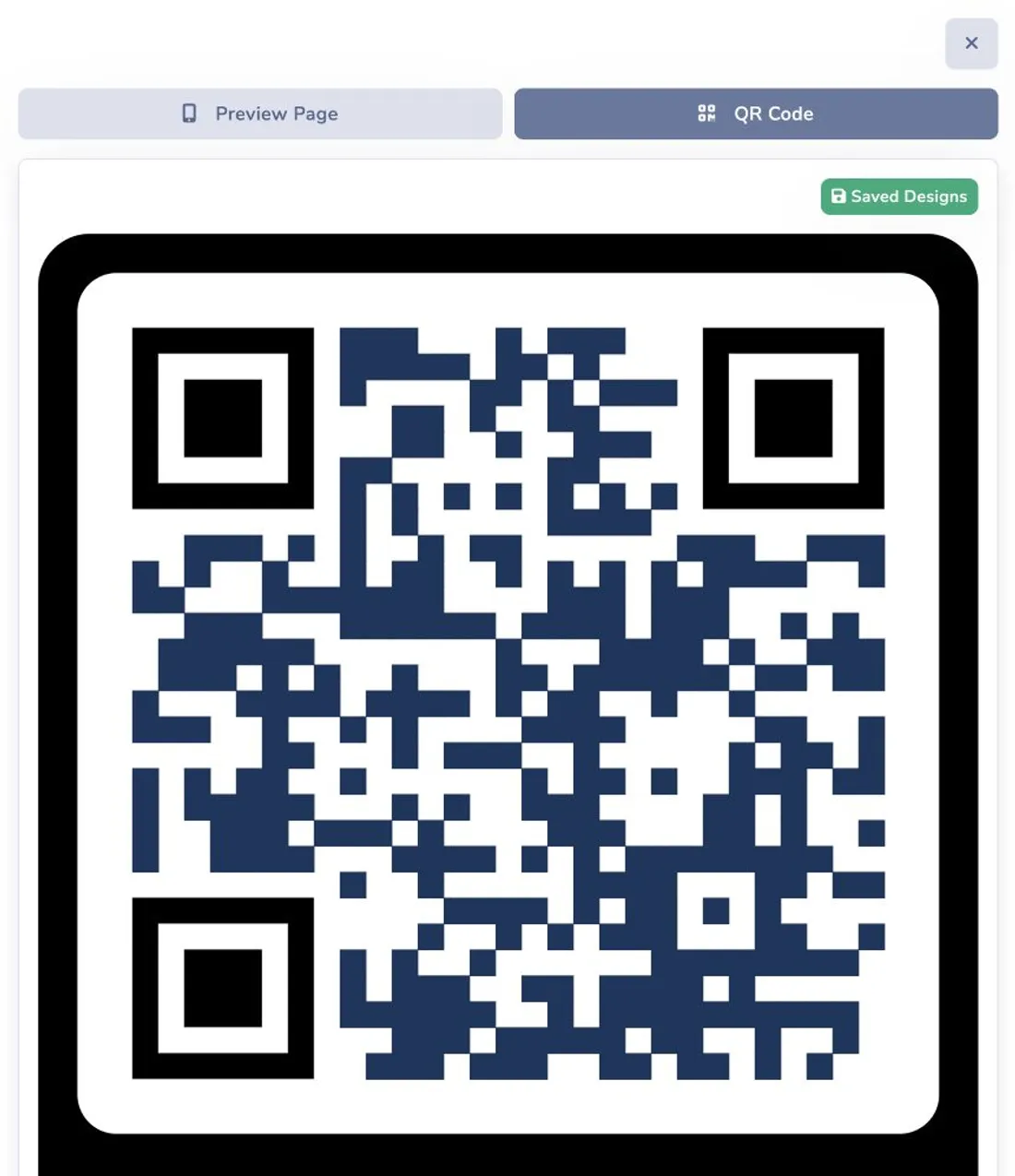
The public Profile Card displayed the fictional name, email and website. We removed the default phone and empty social rows. An initial mobile check at 375 px showed no horizontal overflow. Contact-file import was not tested. The empty account dashboard also asked for a Trustpilot review, before we had created a code; we submitted none.
Scan reporting
The original code showed two scans after our two controlled browser visits. After the tester’s three iPhone scans, the dashboard showed five: iPhone 3 and Mac OS X 2. That matches this small sample; it does not establish general accuracy or reporting latency.
The phone scans appeared under Canada/Montreal. The tester confirmed using a VPN, so this result cannot establish geographic accuracy. CSV controls were visible for device, country and city; we did not test those statistical exports or unique-scanner deduplication.
Correction, September 23, 2026: our earlier review described device reporting as unverified from public pages. The account test confirms that the dashboard provides a device breakdown.
See our analytics comparison for the distinction between tested reporting and documented features.
Pricing and refunds
The official price page, checked September 23, lists $39.99 monthly or $350 annually. The annual display compares $350 with a crossed-out $479 and a 27% saving: approximately the cost of twelve monthly payments. Advertised inclusions are unlimited codes and scans, five seats, API, bulk generation and landing pages. Our test does not validate those capacity or integration claims.
The refund policy describes an initial seven-day refund window, with exceptions including renewals and promotions, and case-by-case requests afterward. No purchase, cancellation or refund was tested. Compare equivalent billing periods in the pricing index.
After the trial
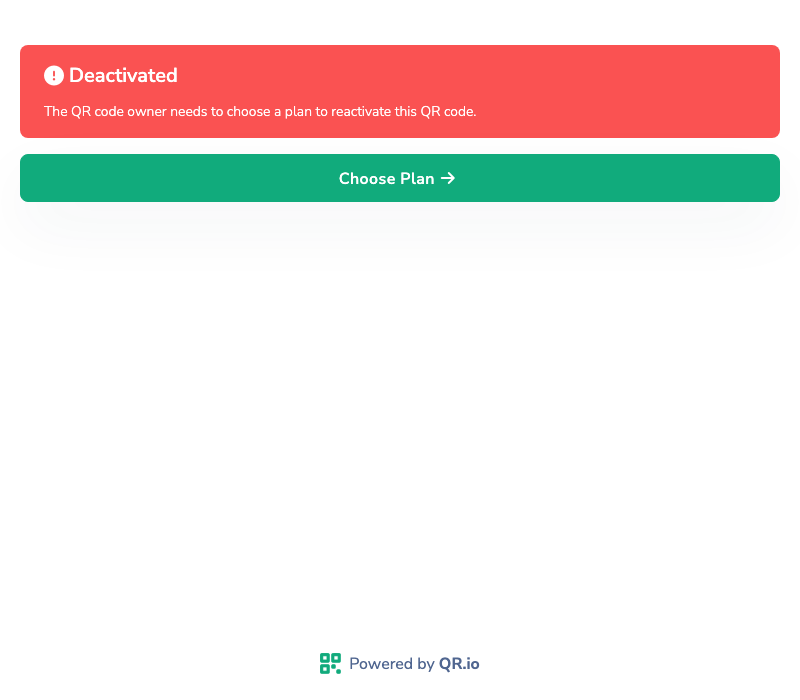
Our account displayed a seven-day trial. QR.io’s previously checked help documentation says dynamic trial codes are paused afterward until upgrading; static codes keep working because their destination is encoded directly. On October 1, 2026, eight days after creation, our original specimen’s short link no longer reached our page. It served the page below directly, with an HTTP 200 status and no redirect. We had checked the code on September 23 and October 1 only, so the exact cut-off time is unknown.
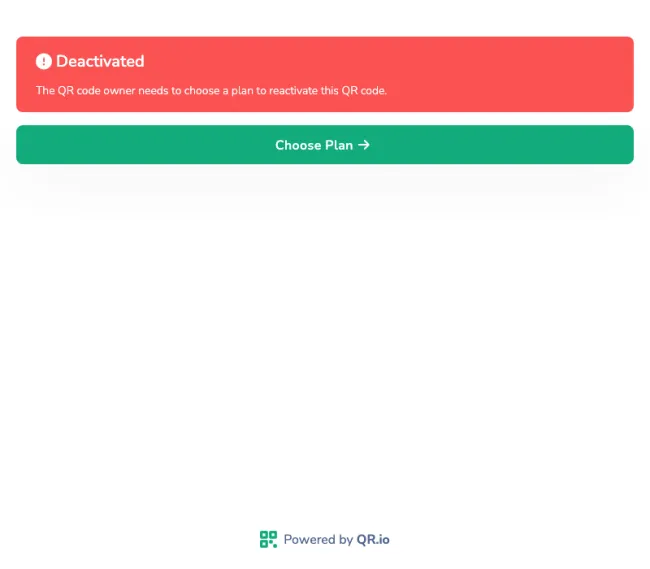
The page says “Deactivated” where the help center says “paused”, and tells the person scanning that the owner needs to choose a plan. We did not choose a plan or test reactivation. Our expiry log classes the code as degraded rather than dead, because a vendor page still loads; for the person scanning, it no longer works.
Do not treat a successful trial scan as a promise that a dynamic code will remain active without payment. For printed materials, settle the subscription decision before distributing the code.
Update, October 1, 2026. This section previously said trial expiry had not yet been observed. The check above matches QR.io’s documented policy; the existing scores are unchanged.
Who it fits
QR.io is worth comparing for teams that need the advertised unlimited quota and five seats in one subscription. The tested editing and scan-reporting workflow worked on our small sample. API, bulk operations and team access still need their own evaluation before a volume deployment.
For a few codes, compare smaller plans in the pricing index. For fixed destinations with no vendor redirect, compare QR Code Monkey. Static codes cannot be edited afterward and do not provide scan reporting.